
The central mystery of this story is not simply why four astronauts returned early. It is what happens when a medical problem develops hundreds of kilometres above Earth, where even a highly trained astronaut may need medical equipment that cannot be taken into orbit.
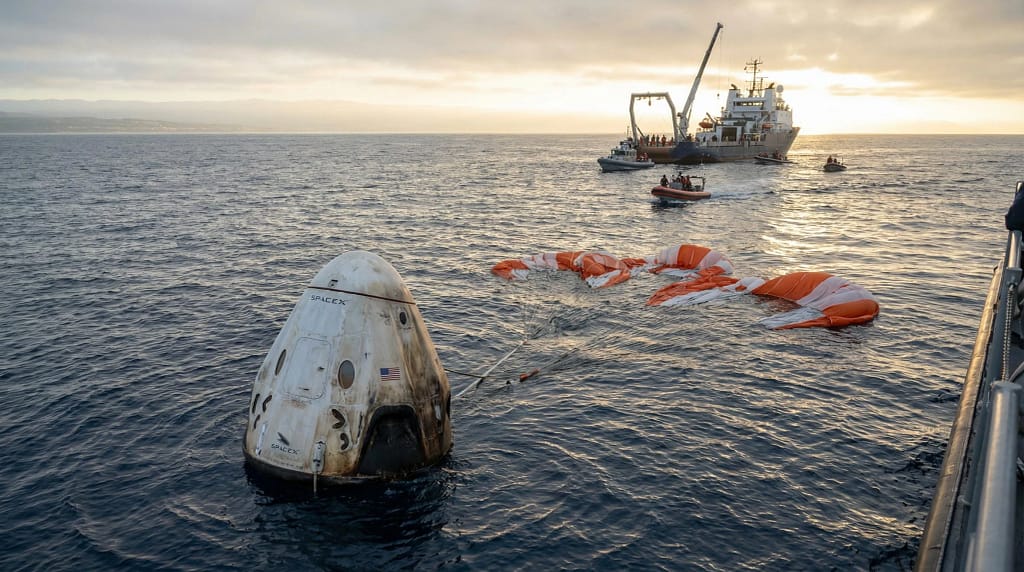
On January 15, 2026, a SpaceX Dragon spacecraft carrying four astronauts descended through Earth’s atmosphere and splashed down in the Pacific Ocean off the coast of California.
The return looked like a familiar conclusion to a long-duration International Space Station mission. The astronauts were recovered by rescue teams, transferred from the spacecraft and taken for medical evaluation.
But this was not an ordinary homecoming.
NASA’s Crew-11 mission had been cut short by approximately a month after one astronaut experienced a medical event aboard the International Space Station (ISS). For the first time in the station’s 25-year history, a crew rotation was brought home early because of a medical concern.
The four astronauts had been expected to continue their mission in orbit. Instead, NASA made a decision that exposed one of the most difficult realities of human space exploration: even a sophisticated orbital laboratory cannot provide every medical service available on Earth.
Initially, NASA refused to identify the affected astronaut or disclose the nature of the medical problem, citing privacy concerns.
Then, in February, a significant update changed the story.
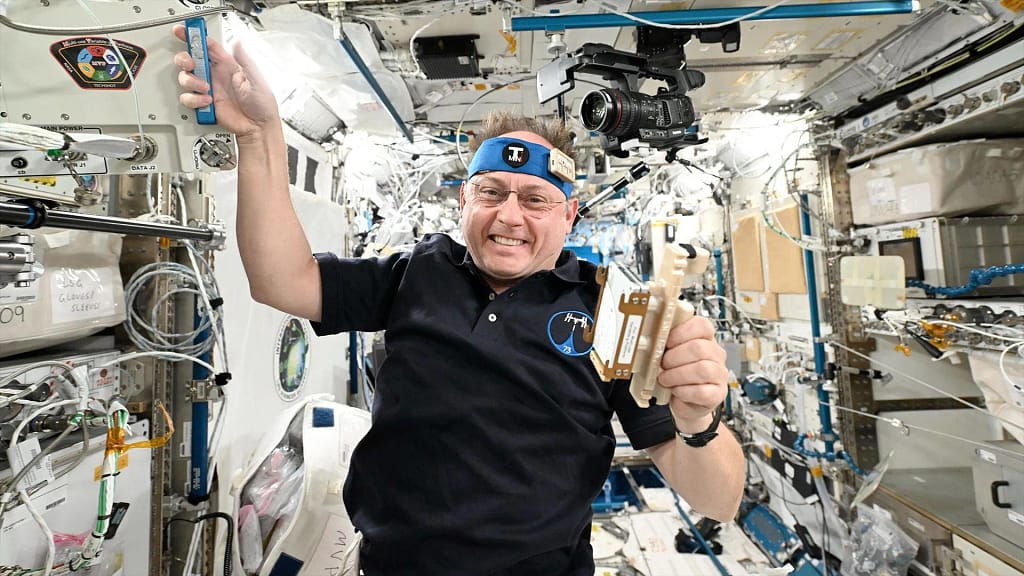
Astronaut Mike Fincke publicly revealed that he was the crew member who experienced the medical event.
Yet the precise diagnosis remained undisclosed.
What happened during those hours aboard the ISS? Why was returning all four astronauts necessary? And what does this incident reveal about the risks of sending humans on longer missions to the Moon and Mars?
The answers offer a remarkable insight into the challenges of keeping human beings alive in space.
January 7: The Medical Event That Changed the Mission
The incident began on January 7, 2026, while the Crew-11 astronauts were aboard the International Space Station.
The crew consisted of:
-
Zena Cardman – NASA astronaut and mission commander.
-
Mike Fincke – NASA astronaut and spacecraft pilot.
-
Kimiya Yui – Japanese astronaut from JAXA.
-
Oleg Platonov – Russian cosmonaut.
They had arrived at the ISS in August 2025 aboard SpaceX’s Crew Dragon spacecraft and were expected to complete a mission lasting approximately six months.
On January 7, one crew member experienced a medical event requiring immediate attention from fellow astronauts.
NASA initially provided very limited information. Officials confirmed that the astronaut was stable but did not reveal the symptoms, diagnosis or identity.
The following day, NASA announced that the agency had decided to bring the entire Crew-11 team back to Earth ahead of schedule.
The announcement was significant because medical problems aboard the ISS are not automatically grounds for ending an entire crew’s mission.
Astronauts receive extensive medical training before launch. They also have access to medical equipment aboard the station and continuous support from flight surgeons on Earth.
But the resources available in orbit have limits.
NASA Administrator Jared Isaacman explained that the ISS did not have the necessary capability to properly diagnose and treat the medical condition.
The decision was therefore made to prioritise the astronaut’s health rather than continue the mission.
NASA’s announcement and the subsequent return details are documented in its official mission updates.
The Astronaut Was Identified: Mike Fincke Breaks His Silence
For several weeks, the identity of the affected astronaut remained confidential.
On February 25, 2026, NASA published a statement from Mike Fincke confirming that he was the crew member who had experienced the medical event.
His statement revealed something important about the severity of the situation.
Fincke explained that the incident required immediate attention from his crewmates. Their rapid response, supported by NASA flight surgeons on the ground, helped stabilise his condition.
He also clarified that NASA’s decision to return Crew-11 early was not an emergency evacuation in the traditional sense.
Instead, it was a carefully coordinated medical return designed to provide access to advanced medical imaging that was unavailable aboard the ISS.
Fincke expressed gratitude to his fellow astronauts, NASA, SpaceX and the medical professionals who assisted him after landing. He also confirmed that he was doing well and undergoing standard post-flight reconditioning at NASA’s Johnson Space Center in Houston.
However, one important question remained unanswered.
What exactly happened to Mike Fincke?
March 2026: A New Revelation Makes the Mystery Even More Intriguing
On March 27, 2026, the Associated Press published a further interview with Fincke that offered the clearest description of the incident yet.
According to Fincke, he had been eating dinner aboard the ISS on January 7 after preparations for the following day’s spacewalk when he suddenly became unable to speak.
The episode reportedly lasted approximately 20 minutes.
He remembered no pain and said the incident came completely unexpectedly. His fellow astronauts recognised that something was wrong and quickly responded, contacting medical specialists on the ground.
The most intriguing part was that doctors still did not have a definitive explanation for what had happened.
Fincke said that medical evaluations had ruled out a heart attack and choking, but other possible explanations remained under consideration.
He also explained that he had never experienced anything similar before or since the incident.
The astronaut’s account added an important human dimension to a story that had initially been dominated by speculation.
It also demonstrated why NASA had been reluctant to disclose details before Fincke chose to speak publicly.
The fact that the precise diagnosis remained unresolved is particularly significant.
Space medicine is not simply about treating familiar illnesses in an unfamiliar location. It also involves understanding how the human body responds to an environment that changes normal physiological processes.
Why Couldn’t NASA Treat the Astronaut on the Space Station?
The International Space Station is an extraordinary engineering achievement.
Orbiting approximately 400 kilometres above Earth, it serves as a scientific laboratory, research facility and home for astronauts from several countries.
It is equipped with medical supplies, diagnostic equipment and communication systems that allow flight surgeons on Earth to advise astronauts during medical situations.
Crew members also receive medical training before their missions.
But the ISS is not a hospital.
There are important differences between treating a patient in orbit and treating one in a fully equipped medical facility on Earth.
1. Limited diagnostic equipment
The station has medical equipment, including ultrasound capabilities, that can help astronauts and flight surgeons assess certain conditions.
However, it does not have the full range of diagnostic imaging equipment available in terrestrial hospitals.
For example, advanced imaging procedures may require specialised machines, facilities and personnel that cannot simply be transported into orbit.
Fincke specifically identified advanced medical imaging as the reason for returning to Earth.
This distinction is important: NASA did not say that no medical care was possible aboard the ISS. Rather, the available resources were insufficient for the complete evaluation considered necessary in his case.
2. Microgravity changes how the body functions
Living in space places unusual demands on human physiology.
Without Earth’s normal gravitational pull, bodily fluids redistribute, muscles experience reduced loading and the cardiovascular system adapts to a different environment.
Astronauts can experience changes in vision, balance, bone density, muscle strength and cardiovascular function.
These changes are among the reasons NASA monitors astronaut health before, during and after long-duration missions.
A medical event in orbit therefore has to be evaluated with the effects of microgravity in mind.
3. Limited medical personnel
The ISS does not have a permanent team of doctors and nurses.
Astronauts are trained to provide certain forms of medical assistance, while specialists on Earth guide them through more complex situations.
This arrangement works for many medical problems, but it cannot replace the capabilities of a hospital.
For a condition requiring advanced investigations, returning the patient to Earth can be the safest option.
Why Did All Four Astronauts Have to Return?

This is one of the most interesting aspects of the Crew-11 incident.
Why not simply bring Mike Fincke home while allowing the other three astronauts to continue their mission?
The answer involves the way NASA and SpaceX organise crew transportation to the ISS.
The Crew Dragon spacecraft is not merely a taxi. It also serves as an emergency return vehicle for the astronauts assigned to it.
Crew members are transported to the station together and normally return together in the same spacecraft.
The vehicle must remain available as a safe means of returning its assigned crew to Earth.
If one member requires an early return, the remaining crew members cannot simply be left without their designated return arrangement.
NASA therefore coordinated the return of the entire four-person Crew-11 team.
There was another operational consideration: the ISS needed to maintain its ability to function after their departure.
NASA distributes astronauts across different spacecraft to maintain an appropriate international crew presence and ensure that the station can continue operating if one vehicle has to leave early.
Following Crew-11’s departure, NASA astronaut Chris Williams and two Russian cosmonauts remained aboard the station.
This allowed the orbital laboratory to continue functioning while NASA and its partners arranged the next crew rotation.
The decision was therefore both a medical and operational one.
The Cancelled Spacewalk: Another Sign That Something Was Wrong
The medical event also disrupted an important planned operation outside the ISS.
NASA had scheduled astronauts Mike Fincke and Zena Cardman to conduct a spacewalk on January 8.
The planned excursion was expected to last approximately six and a half hours and involved installing hardware and performing other maintenance activities outside the orbital laboratory.
However, NASA cancelled the spacewalk following the medical concern involving a crew member.
This was a sensible decision.
A spacewalk is among the most physically demanding activities an astronaut can undertake. It requires careful preparation, coordination, pressure protection and the ability to respond to unexpected situations.
Sending an astronaut outside the station while a medical issue was being assessed would have introduced unnecessary risk.
The cancellation was one of the earliest public indications that the situation aboard Crew-11 was more serious than an ordinary medical consultation.
January 14–15: The Journey Back to Earth
After evaluating the situation, NASA and SpaceX organised an accelerated return.
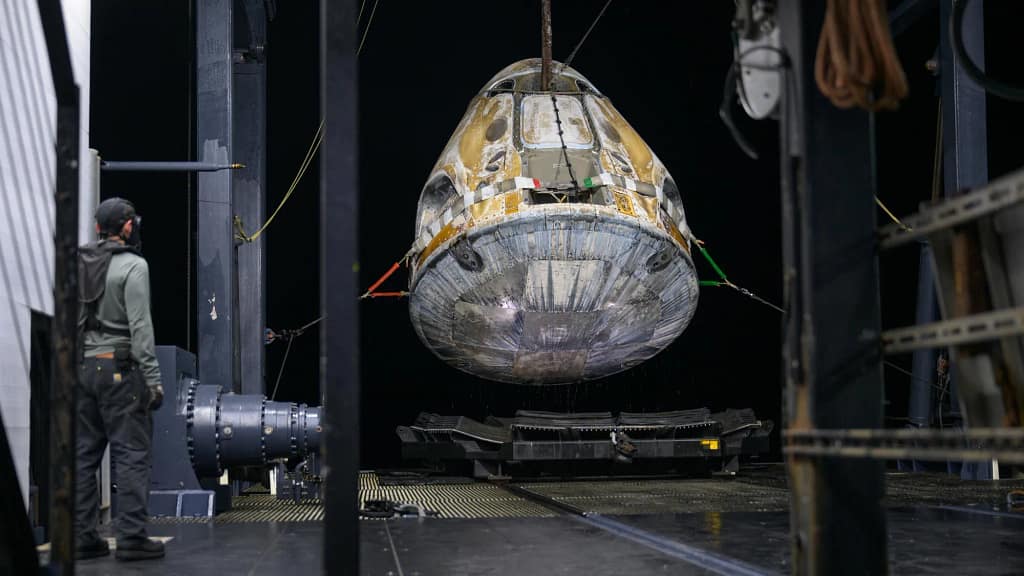
On January 14, the four astronauts entered their SpaceX Dragon Endeavour spacecraft and prepared for departure.
At approximately 5:20 p.m. Eastern Standard Time, Dragon undocked from the ISS.
The spacecraft then began its journey back towards Earth.
The return involved several carefully coordinated stages:
-
Undocking from the International Space Station.
-
Moving away from the orbital complex.
-
Performing the deorbit burn to begin atmospheric re-entry.
-
Deploying parachutes to slow the spacecraft.
-
Splashing down in the Pacific Ocean.
-
Recovery by SpaceX’s recovery teams.
At approximately 3:41 a.m. Eastern Standard Time on January 15, the Dragon spacecraft splashed down off the coast of San Diego, California.
The four astronauts had completed 167 days in space.
NASA recovery personnel retrieved the crew and transported them for additional medical evaluation.
All four astronauts remained stable and were subsequently released following a planned overnight hospital stay.
They arrived at NASA’s Johnson Space Center in Houston on January 16 to begin standard post-flight reconditioning and evaluations.
What Does This Incident Mean for Future Moon and Mars Missions?
The Crew-11 incident raises questions that extend well beyond the International Space Station.
Humanity is preparing for increasingly ambitious space exploration programmes.
NASA’s Artemis programme aims to establish a sustained human presence around the Moon and eventually support future crewed missions to Mars.
But the further humans travel from Earth, the more difficult medical emergencies become.
The Moon: A medical challenge within reach of Earth
The Moon is approximately 384,400 kilometres from Earth.
Although this is vastly farther away than the ISS, communication and transportation options remain more manageable than they would be during a Mars expedition.
Nevertheless, astronauts exploring the lunar surface will face new risks, including:
-
Exposure to radiation.
-
Reduced gravity.
-
Dust-related respiratory and equipment hazards.
-
Injuries during surface operations.
-
Medical conditions requiring advanced imaging or surgery.
A medical problem that requires an immediate return to Earth could be particularly difficult to manage during a lunar expedition.
Mars: There may be no quick medical evacuation
The challenge becomes considerably greater with Mars.
Depending on planetary positions and spacecraft trajectories, a journey between Earth and Mars can take several months.
Communication delays can also become substantial, meaning astronauts cannot always receive immediate guidance from doctors on Earth.
Imagine an astronaut experiencing an unexplained neurological event, a serious cardiac problem or an internal injury during a Mars mission.
There would be no realistic option to bring that person home within hours.
The crew would need to rely on onboard medical equipment, trained personnel, autonomous diagnostic systems and carefully designed emergency procedures.
This is why space agencies are investigating technologies that could improve medical independence during deep-space missions.
Could artificial intelligence become the doctor in space?
One promising area is AI-assisted medical diagnosis.
Future spacecraft could potentially use advanced systems to analyse medical scans, monitor vital signs, identify abnormal patterns and assist astronauts with medical procedures.
Portable ultrasound devices, automated diagnostic systems and robotic medical equipment could become increasingly important.
However, AI cannot simply replace trained medical professionals.
Any autonomous medical system would need rigorous testing, reliable performance and safeguards against incorrect diagnoses.
The Crew-11 experience demonstrates why developing these capabilities is essential before humans undertake long-duration missions far beyond Earth.
What Crew-11 Accomplished Before Returning
Despite the shortened mission, Crew-11 completed substantial scientific work.
According to NASA, the four astronauts spent 167 days aboard the ISS, travelling approximately 71 million miles and completing more than 2,670 orbits around Earth.
The crew also completed more than 140 scientific experiments during the mission.
Their research and operational work contributed to the continuing scientific objectives of the orbital laboratory.
The incident therefore did not erase the achievements of the mission.
Instead, it demonstrated the importance of having systems capable of responding when an unexpected medical situation changes mission priorities.
The Bigger Question: How Safe Is Long-Term Human Life in Space?
The Crew-11 medical incident highlights an uncomfortable reality.
Astronauts are among the most carefully selected, trained and medically monitored people on Earth.
Yet they remain human beings.
They can develop unexpected illnesses, experience unexplained symptoms and require medical investigations that cannot be performed in orbit.
Even the most sophisticated spacecraft cannot eliminate every medical risk.
The International Space Station has been continuously occupied since November 2000. Over that period, it has demonstrated that humans can live and work in space for extended periods.
But Crew-11 showed that maintaining human health in orbit requires more than food, oxygen, radiation protection and exercise equipment.
It also requires the ability to diagnose problems that may not be immediately understood.
For future missions, medical autonomy could become just as important as propulsion, navigation and life-support systems.
Final Thoughts: Space Exploration Has a Human Limit
Mike Fincke’s medical incident did not involve a catastrophic spacecraft failure, a collision with space debris or a life-threatening emergency that required an immediate rescue.
It involved something more familiar, yet equally important: an unexplained medical event affecting a human being far from a hospital.
His crewmates responded quickly. NASA’s flight surgeons helped stabilise the situation. Mission controllers and SpaceX coordinated an early return. Medical professionals on Earth then provided access to investigations unavailable aboard the ISS.
That chain of cooperation made the outcome possible.
But the episode leaves an important question for the future of human spaceflight.
If an astronaut experiences an unexplained medical condition while travelling millions of kilometres from Earth, what happens when returning home is no longer an option?
The Crew-11 mission offered a reminder that getting humans into space is only half the challenge.
The real test of humanity’s future among the stars may be whether we can keep astronauts alive when Earth is too far away to help.




